B-more needs to feel like a place the survivors are moving through. The backdrop, the light, and the threats all contribute to that feeling.
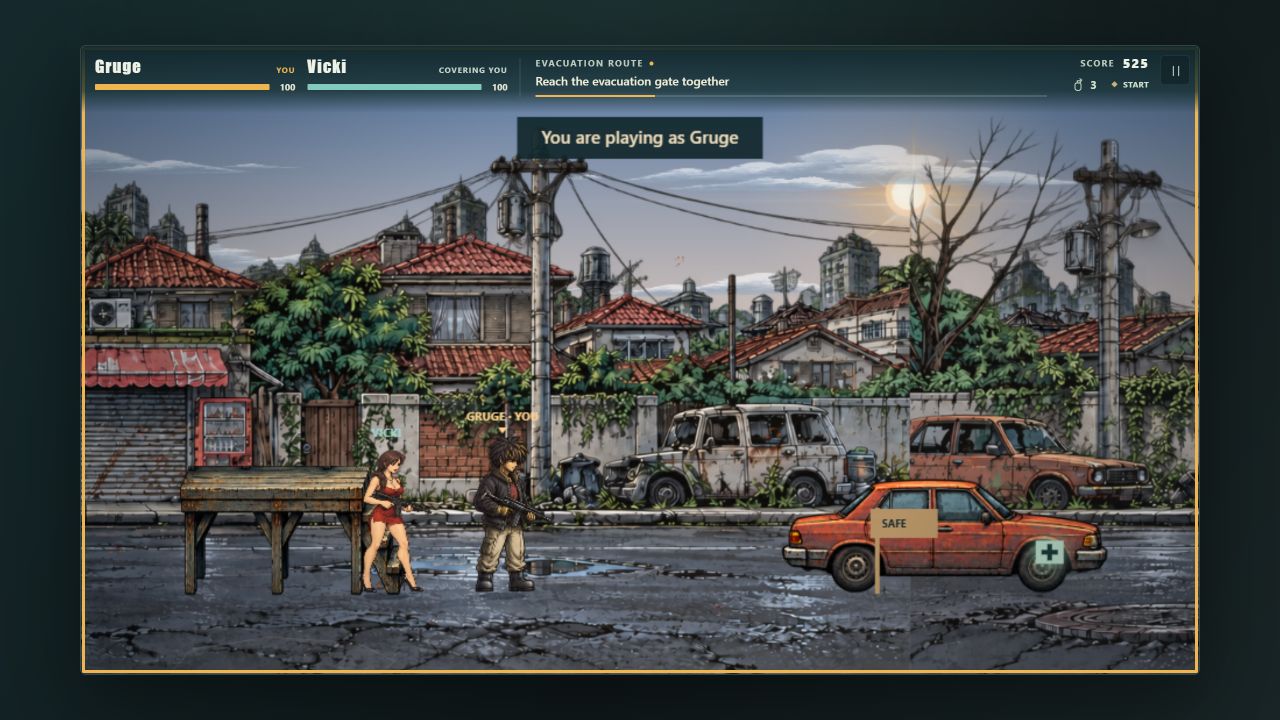
A clear sky behind the clouds
The scenery is split into layers so the distant city and nearer street move at different rates. The sky stays separate from the clouds. That leaves room for the sun and moon to be visible, rather than disappearing behind a single flat background image.
Day and night lighting changes the mood of the same street. Celestial glow, glare, cast shadows, and weather effects help the buildings and survivors belong in that light. The painted scenery stays the visual foundation.
A map that belongs to the game
The B-more city map was rebuilt with weathered brick, worn concrete, cracked roads, roof tiles, grass, metal, wood, and water textures. The city extends beyond the view, with painted skyline layers behind it, rather than sitting on a small square in darkness.
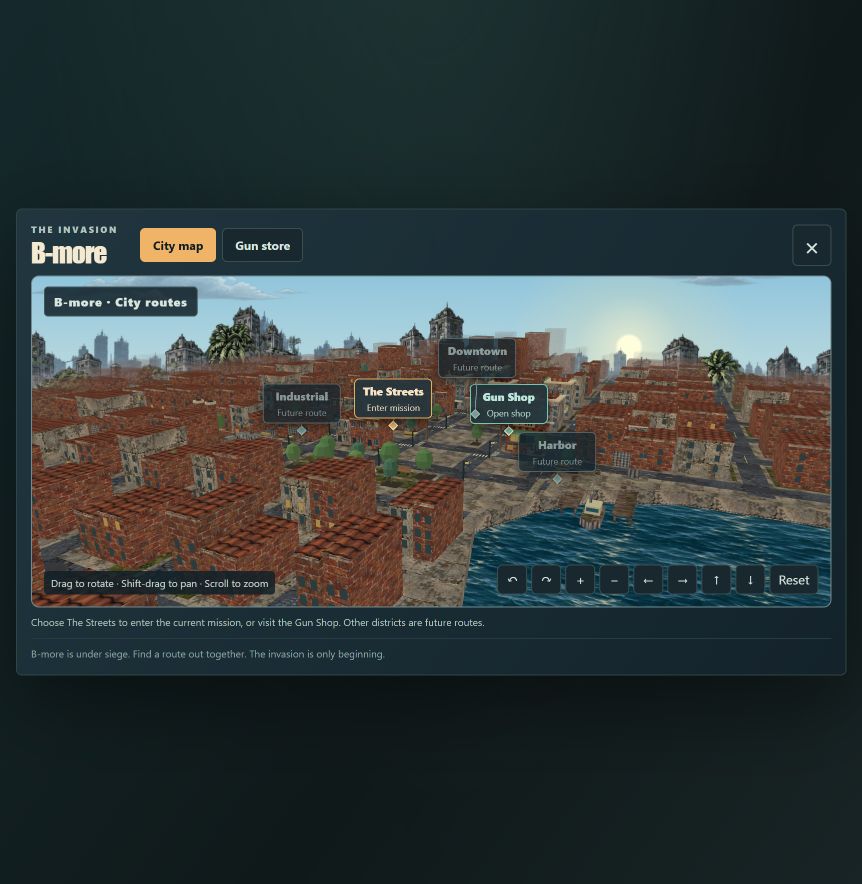
The current build opens The Streets as its first mission. The Gun Shop lets each survivor prepare their equipment. Other named districts are marked as future routes; they are not additional playable levels in this build.
The infected still have weapons
The original idea was not limited to zombies walking toward the player. Some carry blades, others use guns, and bomb throwers force the survivors to watch for incoming explosives. Taking an infected apart can also change what it can do, including disabling its weapon arm.
Solo play lets you switch between Gruge and Vicki while the other survivor follows and fights beside you. Local co-op gives each survivor to a separate player. In either mode, getting both of them through the route is the point of the mission.
The city, combat, and weather are being developed together around that playable first route.